


You know that feeling when someone suggests you "just take a bubble bath" or "try some yoga" when you're running on fumes? Yeah. If you're parenting a child with ADHD (or parenting with ADHD yourself), you've probably heard this advice more times than you can count. And honestly? It probably made you want to scream into a pillow.
Here's the truth: ADHD parent burnout isn't something a face mask can fix. It's not about needing more "me time" or downloading another meditation app. Research shows that parents of children with ADHD are more than four times as likely to experience burnout compared to other parents. That's not because you're doing something wrong, it's because the system you're operating in is fundamentally overwhelming.
Why the Self-Care Industrial Complex Misses the Mark
Let's talk about what burnout actually is. It's not just being tired (though you're probably exhausted). Real burnout happens when there's a massive imbalance between the stress you're carrying and the resources you have to handle it.
Think about your typical day: You're managing appointments with therapists, coordinating with teachers who may or may not understand your child's needs, anticipating and preventing meltdowns, helping with homework that turns into a battle, providing constant emotional regulation for your kid (and yourself), and somehow trying to keep the household running. Oh, and you're supposed to remember to drink water and "practice gratitude" while you're at it.

The problem isn't that you need better coping skills. The problem is that the load is too heavy, and the support isn't nearly enough.
When well-meaning friends suggest self-care, they're asking you to individually solve a structural problem. It's like trying to bail water out of a sinking boat with a teaspoon instead of fixing the hole. Sure, the teaspoon might help for a second, but you're still sinking.
What's Actually Driving You to Burnout
Let's name the real culprits here, because understanding what's happening is the first step to changing it.
The Relentless Mental Load
You're not just parenting, you're project managing a complex operation. Every outing requires a mental checklist: Will there be sensory triggers? Do I have the fidget toys? What's the exit strategy if things go sideways? You're constantly three steps ahead, running simulations in your mind, calculating risk, preparing for every possible scenario.
And that doesn't even include the emotional labor of advocating for your child in spaces that weren't designed for them, explaining their needs to people who don't get it, and absorbing everyone else's judgment (real or imagined) while you're just trying to survive the grocery store trip.
The Perfectionism Trap
Many ADHD parents hold themselves to impossible standards. You think you should be able to handle it all, after all, other parents seem to be managing just fine (spoiler: they're not, but that's another conversation). Every struggle feels like personal failure. Every meltdown feels like proof you're not doing enough.
This internal pressure creates guilt and self-criticism that compounds your exhaustion. You're not just dealing with the actual challenges, you're also battling yourself about how you're handling the challenges.

The Isolation Cycle
Here's a painful pattern: Your child struggles in traditional social settings. Playdates are complicated. Birthday parties are stressful. Community events feel impossible. So gradually, you stop going. You pull back from the very connections that might offer support, because the effort of managing everyone's experience (including your child's overwhelm and other people's reactions) is just too much.
Before you know it, you're isolated, cut off from the community support that could actually help distribute some of that load.
The Sleep Deprivation Reality
Let's not forget the most basic resource that's probably missing: sleep. Many neurodivergent kids have sleep challenges, which means you're often up multiple times a night or dealing with a child who's wired until midnight. Without deep, restorative sleep, your nervous system can't reset. Everything feels harder because your brain literally doesn't have the resources to process stress effectively.
What Actually Works: Building Real Resources
Okay, so if bubble baths won't cut it, what will? The answer is less about what you do for yourself in isolated moments and more about rebuilding the foundation so you're not operating in constant crisis mode.
Understanding Your Nervous System
When you're in burnout, your nervous system is stuck in survival mode. You're operating from a place of threat, always scanning for the next problem, always braced for impact. Learning what's happening in your body during these moments isn't just interesting information; it's the beginning of being able to shift it.
This might look like noticing when you're in fight-or-flight (tension in your shoulders, short breath, racing thoughts) and understanding that your body is trying to protect you, even when there's no immediate danger. From there, you can begin to work with your nervous system instead of against it.

dentifying and Managing Your Specific Triggers
Generic advice doesn't work because your stressors are specific. What sends you into overwhelm might be completely different from another ADHD parent.
Maybe it's the chaotic morning routine that starts your day in the red. Maybe it's homework time that consistently ends in tears (yours and theirs). Maybe it's the constant need to redirect behavior without any break in between. Maybe it's the lack of downtime in your schedule, every minute packed with demands.
Once you identify your specific triggers, you can start making strategic changes to reduce them. This isn't about eliminating all stress (impossible), but about identifying where you can reduce the load in ways that matter most for your unique situation.
Reducing Demands Strategically (Not Perfectly)
What if, instead of trying to do everything better, you just did less? I know, I know, it doesn't feel like an option. But burnout recovery often requires temporarily lowering standards and dropping some balls intentionally.
This might mean:
- Ordering groceries online instead of doing the sensory-overwhelming store trip
- Letting your child wear the same "safe" outfit multiple days in a row
- Saying no to activities that drain more than they nourish
- Accepting that your house won't look like Pinterest, and that's completely fine
- Using paper plates during particularly rough weeks (seriously, it's okay)
The goal isn't to maintain this forever, it's to create breathing room so you can stabilize.
Building Actual Support (Not Just Coping Alone)
Here's where things get real: You need help. Not the "let me know if you need anything" kind of help that puts the burden back on you to ask. You need structured, knowledgeable support from people who actually understand what you're living.
This might include:
- Connecting with other neurodivergent parents who get it without explanation
- Working with professionals who specialize in neurodivergent family systems, not just generic parenting advice that doesn't apply to your reality
- Building a practical support network for actual help with logistics, not just emotional support (though that matters too)
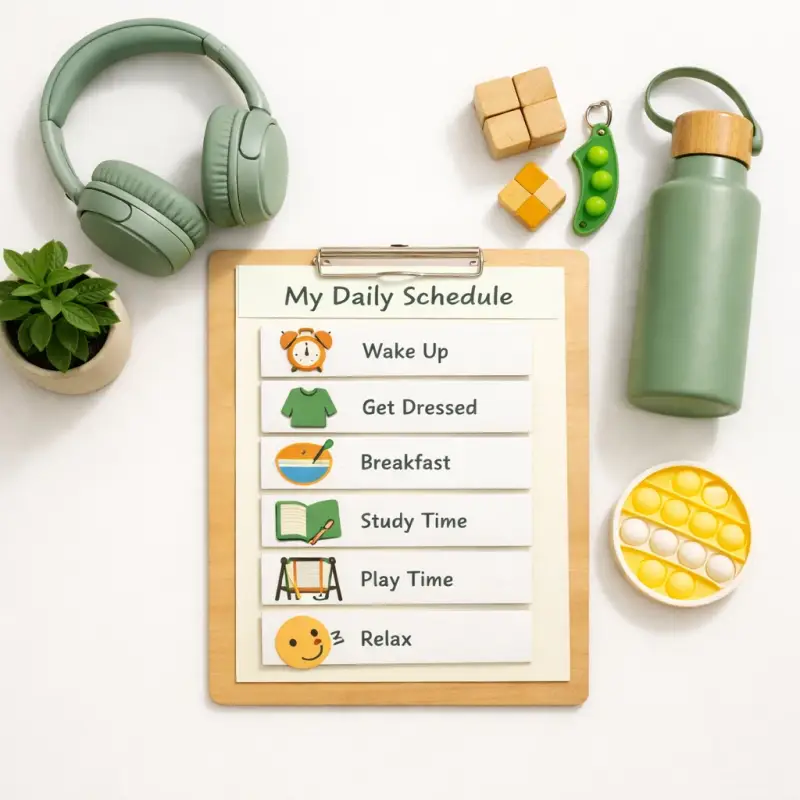
At The Regulated Bridge, we offer personalized coaching specifically for neurodivergent parents because we know that cookie-cutter solutions don't work. Our approach isn't about fixing you or your child, it's about building sustainable systems that work with your family's unique needs, not against them.
Addressing the Structural Barriers
Sometimes the issue isn't what you're doing, it's what you're up against. Economic stress, lack of access to appropriate services, inadequate school support, limited healthcare options, these aren't problems you can positive-think your way out of.
Recovery might involve advocacy work: fighting for the IEP accommodations your child needs, seeking out sliding-scale therapy options, connecting with parent advocacy groups, or finding creative solutions to financial barriers. This isn't self-care in the traditional sense, but reducing these external pressures is crucial for long-term sustainability.
The Path Forward Isn't About Doing More
If you take nothing else from this, let it be this: ADHD parent burnout isn't a personal failing that you need to self-care your way out of. It's a reasonable response to unreasonable demands.
Recovery isn't about adding more to your plate (even if that thing is "wellness practices"). It's about reducing the stress load and increasing your actual resources, the tangible supports, the understanding community, the practical help, the systemic changes that make your daily reality more manageable.
You don't need to be more resilient. You need the conditions that are creating the burnout to change. And while you can't control everything, you can start making strategic shifts that redistribute the weight you're carrying.
That might mean reaching out for support from people who specialize in exactly this. It might mean having honest conversations with your partner about rebalancing the load. It might mean dropping obligations that aren't serving your family anymore.
Whatever it looks like for you, please know this: The exhaustion you feel is valid. The struggle is real. And you deserve support that actually addresses the root of the problem, not just tells you to breathe deeper while you're drowning.
You're not broken. The system is. And you deserve better than a bubble bath band-aid.
Ready for support that actually fits your brain (and your life)?
If this hit a little too close to home, you don’t have to figure it out alone. Kara is here to help you move from survival mode to a home that feels more steady, more doable, and more yours.
If you feel like you’re ready to start the work, the easiest first step is a free, no-pressure Bridge Call. We’ll talk about what’s been hardest lately, what’s getting in the way, and what kind of support would actually make a difference for your family.
Book your free Bridge Call here: https://www.theregulatedbridge.com/our-services
Add comment
Comments