

7 School-Based De-Escalation Strategies That Actually Work at Home
![[HERO] 7 School-Based De-Escalation Strategies That Actually Work at Home](https://cdn.marblism.com/eBp7Io8oAZ6.webp)
You know that moment at 4:00 PM when your kid walks through the door and immediately loses it over... literally nothing? The backpack gets thrown, the snack isn't right, and suddenly you're wondering how this is the same child their teacher calls "delightful" and "so well-behaved at school."
Here's the thing: your 9–11-year-old isn't faking it at school. They're holding it together using every ounce of self-regulation they have, and then they get home to you, the safest person in their world, and completely fall apart.
The good news? Schools have spent decades developing de-escalation strategies for kids that actually work. And with a few tweaks, these same techniques can help you navigate homework meltdowns, sibling wars, and the dreaded after-school collapse without everyone ending up in tears.
Let's break down what's happening in the classroom, and how to bring that magic home.
Why School Strategies Work (And Why Your Kid Melts Down at Home)
Teachers, especially those trained in neurodivergent support, build their entire day around preventing escalation. They use visual schedules, predictable routines, sensory breaks, and low-demand language before a child even gets close to meltdown territory.
At home? We're often reactive. We wait until the explosion happens, then try to put out the fire.
The after-school window (roughly 3:00–6:00 PM) is peak meltdown time because your child has been regulating all day. They've navigated transitions, loud cafeterias, group work with kids who don't get their jokes, fluorescent lights, and sitting still for hours. By the time they see you, their nervous system is maxed out.
That's not a parenting fail. That's actually a sign they trust you enough to let their guard down.
So let's steal the strategies that help them hold it together at school, and use them to build frustration tolerance and resilience at home, without the constant power struggles.

1. Body Breaks (Before the Breakdown)
What Schools Do:
Teachers build movement into the day before kids ask for it. Think: brain breaks between subjects, standing desks, fidget tools during circle time, or a quick lap around the classroom. It's proactive regulation, not a reward for good behavior.
How It Looks at Home:
Instead of setting a timer for every 20–30 minutes (which can start to feel frustrating or interrupting—especially if your kid is really into what they’re doing), try a more organic rhythm: offer a quick movement break before starting an activity and before transitioning to the next one.
That might look like: “Want to do a body break before we start homework?” or “Before we switch from Minecraft to dinner, do you want to jump, push the wall, or take a quick lap?” Keep it short and choice-based: trampoline jumps, wall pushes, one dance song, or a fast walk to the mailbox.
The key? Offer it before they're already dysregulated. If you wait until they're already melting down over long division, the break won't work, they're already too far gone. Body breaks are prevention, not punishment-removal.
For neurodivergent kids especially, movement isn't a distraction, it's how their brain processes and resets. You're not "letting them off the hook." You're giving them the tool they need to stay regulated enough to actually do the hard thing.
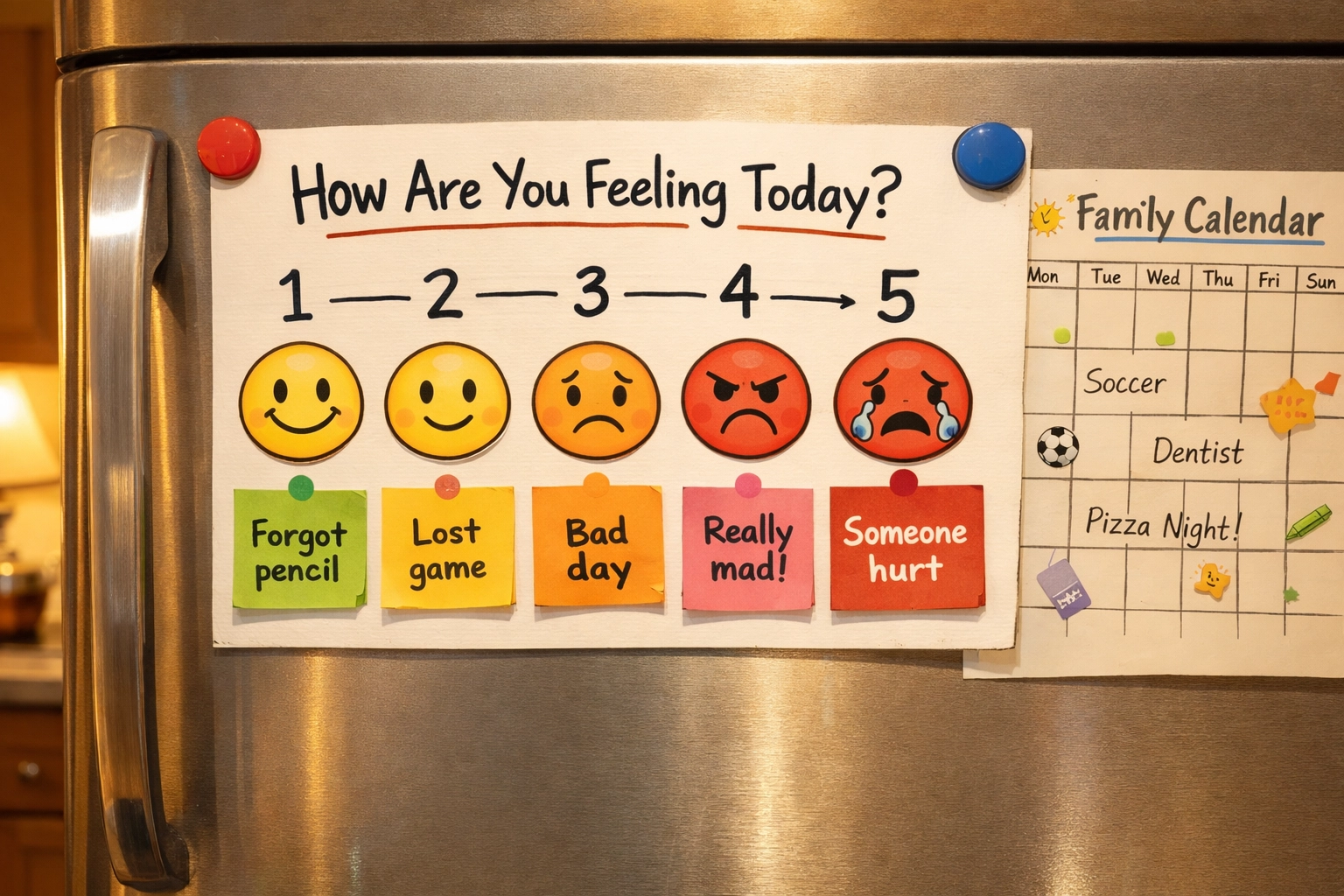
2. "Big vs. Little Problems" (And How It’s Different From Zones of Regulation)
What Schools Do:
In a lot of classrooms, you’ll see both of these tools, but they’re used for different jobs:
- Zones of Regulation (Green/Yellow/Red) = a quick check-in on someone’s general emotional state: “What zone are you in right now?”
- Big vs. Little Problems = a way to size up a specific incident: “Is this a big problem or a little problem?” (like dropping a cookie, losing a turn, or getting the “wrong” fork)
Zones help kids notice where their body/brain are at overall. Big vs. Little helps them decide how much response a particular moment needs.
How It Looks at Home:
Use Zones when you’re trying to get a read on the vibe without digging into details:
- “I’m feeling kind of yellow zone right now—I’m getting tense and I need a minute.”
- “What color zone do you think your body is in?”
Use Big vs. Little for the one thing that just happened:
- “Cookie fell on the floor—ugh. That’s a little problem. We can handle it.”
- “Getting hurt is a big problem. Dropping a cookie is a little problem.”
And here’s the secret sauce: parent modeling. The more you use the language about yourself, the less it feels like an interrogation. You’re showing them the tool in real time:
- “No big deal—that’s a small problem. I can fix it.”
- “I’m in the yellow zone. I’m going to take a breath before I talk.”
Over time, kids start borrowing the phrases because they’ve seen them work—not because they’re being quizzed in the middle of a meltdown.
3. Collaborative Problem Solving (Not Punishment)
What Schools Do:
When a kid struggles with a repeated behavior (like blurting out in class or refusing to start work), teachers trained in Collaborative Proactive Solutions (CPS) don't just consequences them into compliance. They sit down with the student and ask: "What's making this hard for you? Let's figure this out together."
It's not about being "soft." It's about recognizing that kids do well if they can, and if they're not doing well, something is getting in the way.
How It Looks at Home:
Let's say your 11-year-old refuses to brush their teeth every single night, and it's turning into a screaming match. Instead of another lecture about cavities, try this:
- Pick a calm moment (not bedtime).
- Say: "I've noticed toothbrushing has been really tough lately. I'm not mad, I just want to understand what's hard about it."
- Listen without fixing. Maybe the toothpaste flavor is overwhelming. Maybe the bathroom is too bright at night. Maybe they're exhausted and it feels like one more demand.
- Brainstorm solutions together: new toothpaste, dimmer lighting, brushing earlier in the evening, or listening to a song while they brush.
This approach works especially well for neurodivergent kids because it removes the shame spiral. They're not "bad" or "defiant", they're stuck, and you're their teammate helping them get unstuck.
4. Calm-Down Corner (With Actual Tools, Not Isolation)
What Schools Do:
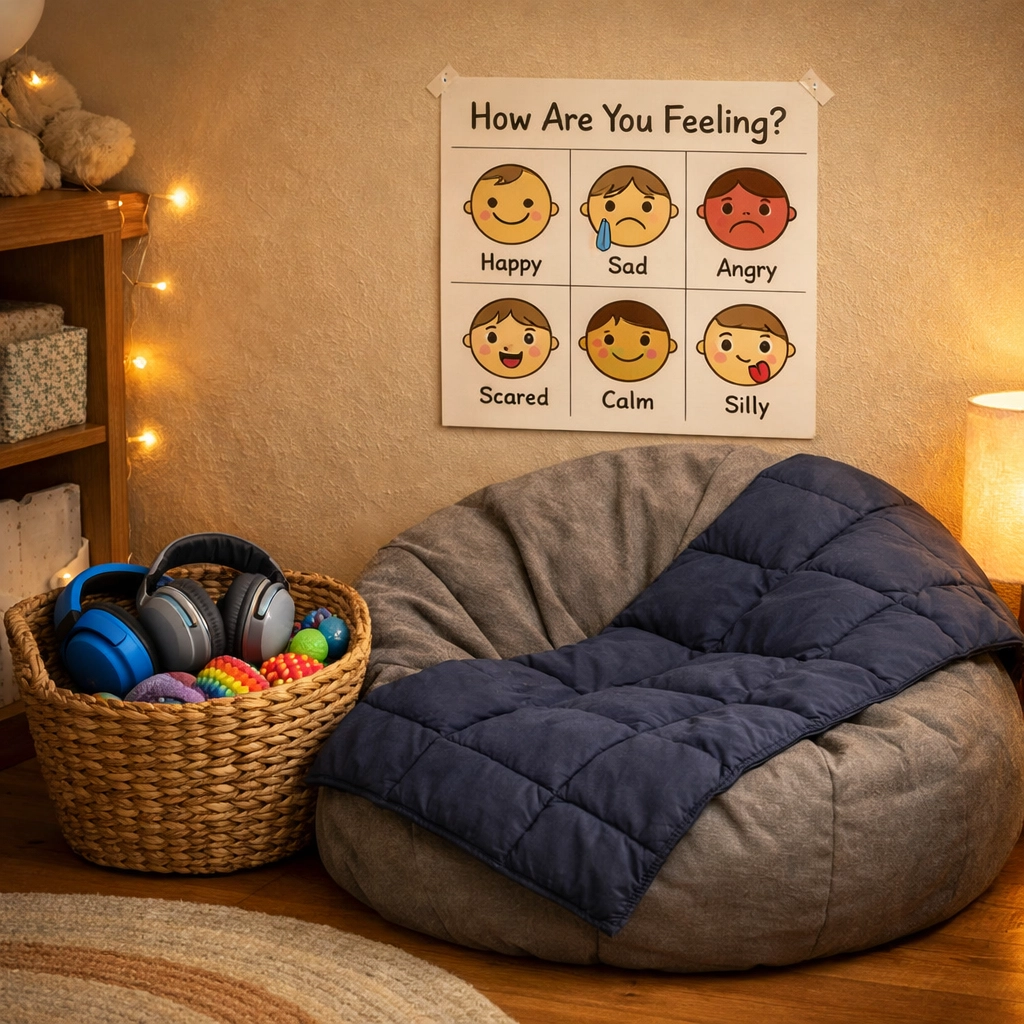
A good classroom calm-down corner isn't a time-out. It's a cozy, low-stimulation space with sensory tools: noise-canceling headphones, a weighted lap pad, fidgets, a feelings chart, and calming visuals. Kids can go there before they lose it, not as a punishment after.
How It Looks at Home:
Designate a corner of your kid's room (or a spot in a quiet hallway) as their regulation zone. Stock it with:
- A beanbag or floor cushions
- Headphones and a calm playlist
- A couple of fidget toys
- A visual emotions chart or a few sentence starters ("I feel _____ because _____")
- Maybe a weighted blanket or a favorite stuffed animal
Introduce it during a calm moment: "This is your reset space. If you're feeling like things are too much, you can go here anytime, no permission needed."
The goal isn't isolation. It's giving them a place and tools to regulate before they hit the point of no return. And when they use it, don't bombard them with questions the second they come out. Let them have the space, then reconnect when they're ready.

5. Simple, Low-Demand Language
What Schools Do:
Teachers are trained to keep instructions short, clear, and emotionally neutral, especially during moments of stress. Instead of "Why can't you just listen? I've told you three times to put your backpack away!", they'll say, "Backpack, please."
Fewer words = less cognitive load = less escalation.
How It Looks at Home:
When your kid is already on edge, this is not the time for a TED Talk about responsibility. Keep it to 5 words or less:
- "Shoes off, please."
- "Homework after snack."
- "Take a break."
If they're in full meltdown mode, silence is even better. Sit nearby, stay calm, and wait. Your regulated presence is the intervention. You can talk about expectations and consequences later, when their prefrontal cortex is back online.
This is one of the most underrated de-escalation strategies for kids, because it removes the thing that often causes escalation in the first place: too many words when the brain can't process them.
6. Offering Choices (Not Ultimatums)
What Schools Do:
Teachers give students agency within boundaries. Instead of "You need to finish this worksheet right now," they say, "Do you want to finish this now or after recess? Your choice."
It's the same expectation, but it shifts the power dynamic from control to collaboration.
How It Looks at Home:
When your 9-year-old is dragging their feet on chores, try: "Do you want to unload the dishwasher before or after your show?"
Both options get the job done. But giving them a choice taps into their need for autonomy and reduces the knee-jerk "NO" that comes from feeling bossed around.
This works especially well for kids who struggle with demand avoidance (a common trait in neurodivergent support circles). The task feels less threatening when they have some control over how it happens.
7. Reconnection Before Correction
What Schools Do:
Trauma-informed teachers know that discipline doesn't work when a child is dysregulated. So after a tough moment, they reconnect first: a hand on the shoulder, a quiet "I'm here," or a simple check-in: before any conversation about behavior.
How It Looks at Home:
After your kid explodes and says something hurtful (or throws something, or slams a door), resist the urge to immediately launch into a consequence conversation. Instead, wait until everyone is calm. Then start with connection:
- "That was really hard. Are you okay now?"
- "I can tell something was really big for you earlier."
- Then: "Let's talk about what happened and what we can do differently next time."
This doesn't mean you skip accountability. It means you prioritize emotional safety first, so the lesson actually lands. A regulated kid can reflect, apologize, and problem-solve. A dysregulated kid can only defend and shut down.
The 4:00 PM Survival Plan
Here's how to put it all together during that after-school danger zone:
- Expect the collapse. Don't take it personally. Their body just spent 6+ hours regulating.
- Offer a snack and a body break immediately. Food and movement are non-negotiables.
- Keep demands low for the first 30 minutes. No "How was your day?" interrogations. Let them decompress.
- Use the Big Deal/Little Deal scale if something goes sideways.
- Offer choices when it's time to transition to homework or chores.
- Reconnect before correcting if things escalate.
You're not lowering your expectations forever. You're working with their nervous system instead of against it.
You Don't Have to Figure This Out Alone
These de-escalation strategies for kids work: but translating them to your home, with your child's specific needs, can feel overwhelming. Especially when you're already running on empty and every day feels like you're one meltdown away from losing it yourself.
That's exactly why we offer a no pressure Bridge Call. It's a free conversation where we talk through what's happening in your home, what's working (even a little), and what tools might actually fit your family's reality.
No scripts. No judgment. Just real support for the hard stuff.
Because your kid isn't broken. They're just trying to survive a world that wasn't built for the way their brain works. And you're not failing: you're just trying to help them without a manual.
Let's build that manual together. Book your Bridge Call here.
Add comment
Comments